
Interactive Education to Improve Traffic Safety Awareness at SMAN 1 Harau Through Card Games
DOI:
https://doi.org/10.24036/pevt1p69Keywords:
Card Game, Gamification, Interactive Education, N-Gain, Traffic SafetyAbstract
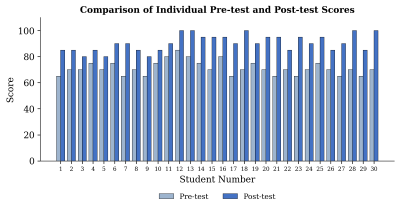
Traffic safety remains a significant issue among adolescents in Indonesia. Senior high school students represent a particularly susceptible demographic. This community service initiative aimed to enhance students' understanding of road safety at SMAN 1 Harau via an interactive card game called Road Smart Card. The program was executed with a one-group pretest-posttest design involving 30 students. The Traffic Smart Card featured depictions of traffic signs, authentic traffic scenarios, and educational inquiries to promote dialogue and contemplation. The results indicated a notable enhancement in students' knowledge, with a posttest mean score of 90.50 compared to a pretest mean score of 71.17, reflecting a 27.17% gain. The mean N-Gain score is 0.68, categorizing it as high and affirming the efficacy of the learning medium. Fifty percent of students achieved a high gain classification, while the remaining fifty percent fell into a medium group, with no students categorized as low. Over 90% of the students actively participated in group discussions and game activities, fostering an engaging and enjoyable learning environment. The therapy also resulted in emotional and behavioral changes in addition to cognitive improvements. The school committed to including media in standard educational practices, the School Safety Patrol extracurricular program, and OSIS activities. The program effectively enhanced understanding and road safety culture among young students in a pertinent and sustainable manner.
Downloads
References
1] Muhammad DA, Maulana A. "Jumlah Kecelakaan Lalu Lintas akibat Remaja Meningkat pada Januari 2024." Kompas, Feb. 2024. [Online]. Available: https://otomotif.kompas.com/read/2024/02/06/171200215.
[2] Kementerian Perhubungan Republik Indonesia. "Korban Kecelakaan Lalin Didominasi Usia Produktif, Menhub Ajak Para Pelajar Selalu Disiplin Berlalu Lintas." 2021. [Online]. Available: https://dephub.go.id.
[3] T. Fadhli, H. Yermadona, and E. Endri. "Inspeksi Keselamatan Jalan Syafruddin Prawira Negara KM 7 sampai KM 8 dengan Metode Hazard Identification and Risk Assessment di Kabupaten Lima Puluh Kota." Ensiklopedia Research and Community Service Review, vol. 3, no. 3, pp. 30–31, 2024. doi: 10.33559/erw.v3i3.2520.
[4] Satlantas Sumatera Barat. "Pengendara tanpa SIM dominasi pelanggaran lalu lintas di Padang Panjang." Antara News, 2019. [Online]. Available: https://sumbar.antaranews.com.
[5] Kementerian Perhubungan Republik Indonesia. "Gerakan SALUD untuk Tingkatkan Ketertiban dan Keselamatan Berlalulintas." 2022. [Online]. Available: https://dephub.go.id.
[6] Dinas Perhubungan Aceh. "Seru dan Edukatif! Pelajar Aceh Belajar Keselamatan Lalu Lintas." 2024. [Online]. Available: https://dishub.acehprov.go.id.
[7] Dinas Perhubungan Kutai Kartanegara. "Safety Riding Diharapkan Bisa Menanamkan Kesadaran Berlalu Lintas pada Kalangan Remaja." 2023. [Online]. Available: https://dishub.kukarkab.go.id.
[8] D. P. Sari and N. Suryani. "Peran orang tua dalam penanaman sikap tertib berlalu lintas pada remaja." Sosio Religi: Jurnal Ilmu-Ilmu Sosial dan Keagamaan, vol. 19, no. 2, pp. 45–56, 2020.
[9] Sirinov Smart Sumut. "SA-RI Card (Safe Ride Card): Edukasi keselamatan berkendara untuk anak-anak." 2023. [Online]. Available: https://sirinovsmart.sumutprov.go.id.
[10] E. Sanggra, J. Prestiliano, and T. Setiawan. "Perancangan Ilustrasi Board Game Mudik dalam Keselamatan Berkendara." ResearchGate, Oct. 2019.
[11] D. A. Kolb. Experiential Learning: Experience as the Source of Learning and Development. Englewood Cliffs, NJ: Prentice-Hall, 1984.
[12] R. R. Hake. "Interactive-engagement versus traditional methods: A six-thousand-student survey of mechanics test data for introductory physics courses." American Journal of Physics, vol. 66, no. 1, pp. 64–74, 1998. doi: 10.1119/1.18809.
[13] A. Gounaridou, E. Siamtanidou, and C. Dimoulas. "A Serious Game for Mediated Education on Traffic Behavior and Safety Awareness." Education Sciences, vol. 11, no. 3, art. 127, 2021. doi: 10.3390/educsci11030127.
[14] I. Nawaz and G. Wets. "Evaluating the Effectiveness of an Online Gamified Traffic Safety Education Platform for Adolescent Motorcyclists in Pakistan." Applied Sciences, vol. 14, no. 19, art. 8590, 2024. doi: 10.3390/app14198590.
[15] Q. Li, R. Tay, and A. Pustaka. "Let Us Save Lives Using Games! A Study of the Effect of Digital Games for Traffic Education." Journal of Educational Technology Systems, vol. 49, no. 2, pp. 199–218, 2020. doi: 10.1177/0047239520926152.
Downloads
Published
Issue
Section
License
Copyright (c) 2025 Fithriyah Patriotika, Rizky Indra Utama, Faisal Ashar

This work is licensed under a Creative Commons Attribution 4.0 International License.