
Analysis of the Level of Road Service on the Srijaya NegaraBukit Besar Road Section, Palembang
DOI:
https://doi.org/10.24036/zbtpjn15Keywords:
Road Capacity, Degree of Saturation, Road Service Level, Traffic Volume, Srijaya Negara StreetAbstract
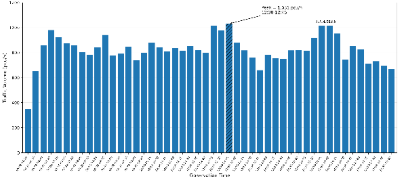
The availability of adequate road capacity is an important factor in supporting the smooth mobility of people in urban areas. Srijaya Negara Street in Ilir Barat I District, Palembang City, is one of the strategic roads serving educational, trade, and service activities, so it has a high traffic volume, especially during peak hours. This condition has the potential to affect the performance of the road section, so an analysis of the road service level is needed. This study aims to analyze the service level of Srijaya Negara Street based on the characteristics of traffic flow and road capacity. The research method was carried out through a field survey with primary data collection in the form of traffic volume, road geometric conditions, and side obstacles. Data were analyzed by calculating traffic volume, road capacity, and degree of saturation (DS) to determine the level of road service. The analysis results show that traffic flow is dominated by motorcycles, followed by light vehicles and heavy vehicles. The value of the Degree of Saturation (DS) obtained is 0.748, so Srijaya Negara Street is included in the Level of Service (LOS) is D. This condition indicates that traffic flow is still stable, but the freedom of drivers to choose speed and perform maneuvers is starting to be limited due to increased interaction between vehicles. The high level of activity in educational and commercial areas, as well as side obstacles, are the main factors affecting road performance. Therefore, traffic management and side obstacle control are necessary to maintain and improve the level of road service in the future.
Downloads
References
[1] BPS-Statistics of Palembang Municipality, Palembang Municipality in Figures 2024. Palembang, Indonesia: BPS-Statistics Indonesia, 2024.
[2] R. Cervero and K. Kockelman, “Travel demand and the 3Ds: Density, diversity, and design,” Transportation Research Part D: Transport and Environment, vol. 2, no. 3, pp. 199-219, 1997, doi: 10.1016/S1361-9209(97)00009-6.
[3] R. Ewing and R. Cervero, “Travel and the built environment: A meta-analysis,” Journal of the American Planning Association, vol. 76, no. 3, pp. 265-294, 2010, doi: 10.1080/01944361003766766.
[4] K. T. Geurs and B. van Wee, “Accessibility evaluation of land-use and transport strategies: Review and research directions,” Journal of Transport Geography, vol. 12, no. 2, pp. 127-140, 2004, doi: 10.1016/j.jtrangeo.2003.10.005.
[5] G. Akar, C. Flynn, and M. Namgung, “Travel choices and links to transportation demand management: Case study at Ohio State University,” Transportation Research Record, vol. 2319, no. 1, pp. 77-85, 2012, doi: 10.3141/2319-09.
[6] V. M. Garikapati, D. You, R. M. Pendyala, T. Patel, J. Kottommannil, and A. Sussman, “Design, development, and implementation of a university travel demand modeling framework,” Transportation Research Record, vol. 2563, no. 1, pp. 105-113, 2016, doi: 10.3141/2563-15.
[7] X. Wang, A. J. Khattak, and S. Son, “What can be learned from analyzing university student travel demand?” Transportation Research Record, vol. 2322, no. 1, pp. 129-137, 2012, doi: 10.3141/2322-14.
[8] X. Chen, “Statistical and activity-based modeling of university student travel behavior,” Transportation Planning and Technology, vol. 35, no. 5, pp. 591-610, 2012, doi: 10.1080/03081060.2012.701818.
[9] Federal Highway Administration, Traffic Monitoring Guide. Washington, DC, USA: U.S. Department of Transportation, 2013.
[10] Directorate General of Highways, Pedoman Kapasitas Jalan Indonesia, 09/P/BM/2023. Jakarta, Indonesia: Ministry of Public Works and Housing, 2023.
[11] National Academies of Sciences, Engineering, and Medicine, Highway Capacity Manual 7th Edition: A Guide for Multimodal Mobility Analysis. Washington, DC, USA: The National Academies Press, 2022.
[12] A. Munawar, “Speed and capacity for urban roads, Indonesian experience,” Procedia - Social and Behavioral Sciences, vol. 16, pp. 382-387, 2011, doi: 10.1016/j.sbspro.2011.04.459.
[13] S. Biswas, S. Chandra, and I. Ghosh, “Side friction parameters and their influences on capacity of Indian undivided urban streets,” International Journal of Transportation Science and Technology, vol. 10, no. 1, pp. 1-19, 2021, doi: 10.1016/j.ijtst.2020.03.007.
[14] S. Salini, S. George, and R. Ashalatha, “Effect of side frictions on traffic characteristics of urban arterials,” Transportation Research Procedia, vol. 17, pp. 636-643, 2016, doi: 10.1016/j.trpro.2016.11.118.
[15] S. Salini and R. Ashalatha, “Analysis of traffic characteristics of urban roads under the influence of roadside frictions,” Case Studies on Transport Policy, vol. 8, no. 1, pp. 94-100, 2020, doi: 10.1016/j.cstp.2018.06.008.
[16] A. M. Rao, S. Velmurugan, and K. M. V. N. Lakshmi, “Evaluation of influence of roadside frictions on the capacity of roads in Delhi, India,” Transportation Research Procedia, vol. 25, pp. 4771-4782, 2017, doi: 10.1016/j.trpro.2017.05.489.
Downloads
Published
Issue
Section
License
Copyright (c) 2025 Paramitha Syafarina, Andi Herius, Septarianti Arini, Nadra Mutiara Sari, S.Salwa Nabilah Putri, M. Jibran Ramadhan, M. Hadi Nugraha

This work is licensed under a Creative Commons Attribution 4.0 International License.