Developing Digital Competence Through Total Station and Laser Waterpass Training for Teachers and Students of SMKN 1 Bukittinggi
DOI:
https://doi.org/10.24036/tnjxz352Keywords:
Digital Competence, Total Station, Laser Waterpass, Vocational School, Surveying TrainingAbstract
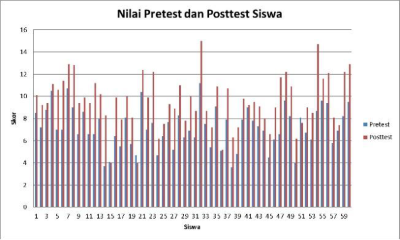
Modern surveying technologies, including Total Station and Laser Waterpass, are essential in construction and surveying activities. However, SMKN 1 Bukittinggi still faces limited access to digital surveying instruments and limited structured training. This community service program aimed to improve the competence of teachers and students in operating digital measuring instruments through theoretical instruction, simulation, field practice, data analysis, and pretest-posttest evaluation. The implementation stages included coordination with the partner school, preparation of training modules, introduction to instrument principles, hands-on measurement activities, processing of field data using GIS and AutoCAD Civil 3D, mentoring, and program evaluation. The results showed an improvement in participants' conceptual understanding and practical skills. The post-training competency completion rate reached 32%, indicating that the training had a positive effect on participants' digital competence, although additional practice and continuous mentoring are still needed. The program also produced training materials and documentation that can support future learning at the school.
Downloads
References
[1]. S. Riyanto, S. S. Sidok, S. Ariah, and I. Hasanudin, “Transforming Vocational Education Management Towards Link and Match with Industry 4.0,” Journal of Social Research, vol. 4, no. 8, pp. 2233–2242, Aug. 2025, doi: 10.55324/josr.v4i8.2729.
[2]. S. Rahmawati, S. Prestridge, A. G. Abdullah, and I. Widiaty, “Unpacking the digital competence challenge in vocational education: A case from Indonesia,” Social Sciences & Humanities Open, vol. 12, p. 101803, 2025, doi: 10.1016/j.ssaho.2025.101803.
[3]. P. Tang, S. Vick, J. Chen, and S. German Paal, “Surveying, Geomatics, and 3D Reconstruction,” in Infrastructure Computer Vision, Elsevier, 2020, pp. 13–64. doi: 10.1016/B978-0-12-815503-5.00002-4.
[4]. L. Kovalenko, “APPLICATION OF MODERN GEODETIC INSTRUMENTS FOR VOLUMETRIC MEASUREMENTS ON CONSTRUCTION SITES,” Bulletin of Kharkov National Automobile and Highway University, no. 112, p. 206, May 2026, doi: 10.30977/BUL.2219-5548.2026.112.0.206.
[5]. A. T. Prasetya, E. Cahyono, Sudarmin, and S. Haryani, “Preparation of authentic assessment instruments on instrumental analysis practice project-based to improve graduate competence,” J. Phys. Conf. Ser., vol. 1567, no. 4, p. 042034, Jun. 2020, doi: 10.1088/1742-6596/1567/4/042034.
[6]. YanQi and G. Mary Geraldine B., “Modern Distance Teacher Training in Narrowing the Gap on the Dual Structure Basic Education,” International Journal of Science and Engineering Applications, Jun. 2023, doi: 10.7753/IJSEA1207.1004.
[7]. Dr. S. Gaikwad and Dr. A. Wadegaonkar, “Exploring Gaps between the Need and Reach for Training Programmes in Higher Education through Teacher Reflections,” YMER Digital, vol. 21, no. 01, pp. 691–705, Jan. 2022, doi: 10.37896/YMER21.01/60.
[8]. M. Said, S. Laid, A. Boudjemaa, and H. Djahnit, “Barriers to continuous training for teachers in various educational levels,” South Florida Journal of Development, vol. 6, no. 5, p. e5308, May 2025, doi: 10.46932/sfjdv6n5-047.
[9]. Y. Qian, S. Vaddiraju, and F. Khan, “Safety education 4.0 – A critical review and a response to the process industry 4.0 need in chemical engineering curriculum,” Saf. Sci., vol. 161, p. 106069, May 2023, doi: 10.1016/j.ssci.2023.106069.
[10]. O. M. Ventista and C. Brown, “Teachers’ professional learning and its impact on students’ learning outcomes: Findings from a systematic review,” Social Sciences & Humanities Open, vol. 8, no. 1, p. 100565, 2023, doi: 10.1016/j.ssaho.2023.100565.
[11]. I. F. Ahmad, F. A. Setiawati, R. P. Prihatin, Q. F. Fitriyah, and Z. S. Thontowi, “Technology-based learning effect on the learning outcomes of Indonesian students: a meta-analysis,” International Journal of Evaluation and Research in Education (IJERE), vol. 13, no. 2, p. 892, Apr. 2024, doi: 10.11591/ijere.v13i2.25383.
[12]. P. Bęś and P. Strzałkowski, “Analysis of the Effectiveness of Safety Training Methods,” Sustainability, vol. 16, no. 7, p. 2732, Mar. 2024, doi: 10.3390/su16072732.
[13]. A. Jääskeläinen, S. Tappura, and J. Pirhonen, “The path toward successful safety performance measurement,” J. Safety Res., vol. 83, pp. 181–194, Dec. 2022, doi: 10.1016/j.jsr.2022.08.014.
[14]. W. Leal Filho et al., “Assessing the impacts of sustainability teaching at higher education institutions,” Discover Sustainability, vol. 6, no. 1, p. 227, Mar. 2025, doi: 10.1007/s43621-025-01024-z.
[15]. I. Zervas and E. Stiakakis, “Digital skills in vocational education and training: Investigating the impact of Erasmus, digital tools, and educational platforms,” Journal of Infrastructure Policy and Development, vol. 8, no. 8, p. 8415, Aug. 2024, doi: 10.24294/jipd.v8i8.8415.
Downloads
Published
Issue
Section
License
Copyright (c) 2025 Yaumal Arbi, M. Giatman, Ari Syaiful Rahman Arifin, Totoh Andayono

This work is licensed under a Creative Commons Attribution 4.0 International License.