
Installation and Testing of Electric Generators in Civil Engineering Structures for Microhydro Power Plants in Nagari Kamang Hilia Agam
DOI:
https://doi.org/10.24036/sx0dh450Keywords:
Microhydro, Environmentally Friendly, Turbelence, Renewable Energy, ElectrificationAbstract
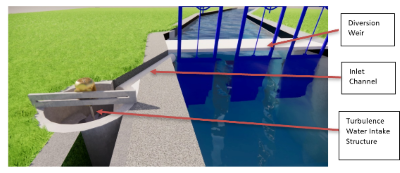
This community service program, conducted by Universitas Negeri Padang in Nagari Kamang Hilia, Agam Regency, focused on the planning, construction, and utilization of a micro-hydro power plant to support local agricultural activities. The program began with coordination with the Nagari government and community to identify challenges and beneficiaries, followed by technical surveys including water discharge mapping, hydraulic head measurement, and land suitability analysis using GIS and UAV-based mapping. Based on these data, detailed engineering designs were prepared for the turbulence-based intake structure, inlet channel, and powerhouse. The project then advanced to the construction of civil works, the installation of turbines, generators, and control panels, and the testing of the operational system. With an installed capacity of up to 5 kW, the plant now provides renewable electricity for agricultural use and street lighting, helping reduce dependence on costly diesel engines. Training and counseling were also delivered to ensure that the community can operate and maintain the system independently. The program demonstrates how micro-hydro technology can be effectively applied to foster rural electrification, empower local farmers, and contribute to sustainable development goals.
Downloads
References
[1]. Badan Pusat Statistik (BPS) Sumatera Barat, “Indicators of agricultural output, employment, and population statistics for West Sumatra and Agam Regency,” 2012–2016 & recent compilations. (Local statistical source used for PDRB share, employment share, population, and jorong listing from your document.)
[2]. D. K. Okot, “Review of small hydropower technology,” Renewable and Sustainable Energy Reviews, vol. 26, pp. 515–520, 2013. (Elsevier). (General SHP/MHP technology background).
[3]. R. Syahputra, R. Hidayat, and M. Ashari, “Renewable energy systems based on micro-hydro and solar photovoltaic for rural areas: A case study in Yogyakarta, Indonesia,” Energy Reports, vol. 7, pp. 521–529, 2021. (Elsevier). (Rural Indonesia MHP-PV case; productive uses).
[4]. M. Rumbayan, R. A. Valiant, and B. T. N. Reros, “Feasibility study of a micro hydro power plant for rural electrification in Lalumpe Village, North Sulawesi, Indonesia,” Sustainability, vol. 15, no. 19, 14285, 2023. (MDPI).
[5]. M. A. Isa, M. A. M. Radzi, M. S. A. M. Ariff, and M. K. Hassan, “Assessing the sustainable development of micro-hydropower plants for rural electrification,” Energies, vol. 14, no. 20, 6456, 2021.
[6]. M. Sinagra, C. Picone, P. Picone, C. Aricò, T. Tucciarelli, and H. M. Ramos, “Low-head hydropower for energy recovery in wastewater systems,” Water, vol. 14, no. 10, 1649, 2022.
[7]. A. Promkhambut and J. Rigg, “Rethinking agrarian transition in Southeast Asia through smallholder rice farming,” World Development, vol. 169, 2023.
[8]. M. Shobur, M. D. L. Siregar, and M. Rivani, “A case study of East Java’s rice sector,” Sustainable Production and Consumption, 2025.
[9]. P. B. Purwandoko, H. S. Pakpahan, and T. T. Widodo, “Design framework of a traceability system for the rice supply chain,” Information, vol. 10, no. 6, p. 218, 2019.
[10]. N. A. Mohidem, N. N. Haron, and I. A. Rahman, “Rice for food security: Revisiting its production, diversity and sustainability,” Agriculture, vol. 12, no. 6, p. 741, 2022.
Downloads
Published
Issue
Section
License
Copyright (c) 2025 Risma Apdeni, Nevy Sandra, Fitra Rifwan, Prima Zola, Elisa Mayenti

This work is licensed under a Creative Commons Attribution 4.0 International License.